


Start with a low-cost model that matches your skills: services (£0–£30 setup, fastest cash), digital products (£0–£100, scalable), or content/affiliate sites (£50–£200/year, slower). Validate demand in 48 hours with a simple UK landing page, £10–£25 ad test, and competitor pricing checks (aim for 1%+ CTR and 5%+ sign-ups). Register with HMRC, cover GDPR/terms, take payments via Stripe, and use free tools like Canva, Sheets, and Calendly. Next, you’ll see quick ways to win your first UK customers.
Key Takeaways
- Pick a low-cost model—freelancing, digital products, or affiliate content—based on skills, setup costs, and fastest time-to-cash.
- Validate your idea in 48 hours using competitor checks, a simple landing page, and a £10–£25 ad test for real demand.
- Price simply in GBP with clear deliverables, delivery times, and refund terms, and ensure GDPR-compliant data collection from day one.
- Register self-employed with HMRC, track income digitally, use Stripe for payments, and open a low-fee UK business bank account.
- Launch a £0–£50 website with essential pages only, use free tools like Canva and Google Sheets, and acquire customers via communities and referrals.
Choose a Cheap Online Business Model in the UK
You’ve got three low-cost online business models that work especially well in the UK: selling services (freelancing or consulting), affiliate/content sites, and digital products like templates or mini-courses.
Pick one by running a quick cost analysis on setup, time-to-cash, and risk.
Services usually win for speed: you can start with a £0–£30 domain and basic tools, then invoice in weeks.
Affiliate/content sites cost more in time than cash—expect £50–£200/year for hosting, plus months of writing before meaningful traffic.
Digital products sit in the middle: £0–£100 for design tools and checkout fees, then you scale with near-zero marginal cost.
Choose the business model that matches your skills, available hours, and target income timeline.
Validate Your Idea in 48 Hours (UK Test Plan)
Before you build anything, you’ll validate your idea in 48 hours with rapid UK market research—check search volume, competitor pricing, and real customer chatter.
Next, you’ll launch a simple landing page with one clear offer and track sign-ups or clicks to see if people in the UK actually want it.
Finally, you’ll look for low-cost demand signals like small-budget Meta/Google ads, Gumtree/Facebook Marketplace messages, or pre-orders to prove traction fast.
Rapid UK Market Research
How fast can you tell whether your online business idea will work in the UK? In 48 hours, if you run tight research.
Start with UK market trends: check Google Trends (UK), ONS stats, and industry reports to confirm demand is rising, stable, or seasonal. Pull 3–5 search terms and note monthly volume and CPC in Google Keyword Planner; high intent plus affordable CPC is a green flag.
Next, do competitor analysis. List 5–10 UK competitors from Google, Amazon, Etsy, or app stores. Track their price points, delivery promises, reviews, and recurring complaints. Estimate differentiation: can you beat them on speed, niche focus, compliance, or bundling?
Finally, validate unit economics with real UK costs (VAT, shipping, returns) and set a minimum viable margin target.
Quick Landing Page Test
Market research tells you whether demand exists in the UK; a quick landing page test tells you whether people will actually click, join a waitlist, or try to buy.
In 48 hours, build a one-page site with a clear promise, one call-to-action, and a simple form.
Use UK wording, pricing in GBP, and a Trustpilot-style proof placeholder.
Drive a small, controlled sample: share to two relevant UK communities and run a £10–£25 geo-targeted ad.
Track visits, CTA clicks, and sign-ups; aim for 2–5% conversion as an early pass.
Use Brand storytelling in the hero line (problem → outcome) and keep copy skimmable.
Then follow up within 12 hours to measure Customer engagement: replies, objections, and willingness to pay.
Low-Cost Demand Signals
Even if you can’t afford a polished launch, you can still spot demand in the UK within 48 hours by looking for signals that cost little (or nothing) to collect.
Start with Google Trends for your core keyword plus “UK” and check if interest is rising.
Then scan Amazon UK and Etsy: note review counts, recent review dates, and “bought in past month” style badges as Market indicators.
Next, run a £10–£20 Facebook or Instagram click ad to your quick landing page and track CTR and email sign-ups.
Aim for 1%+ CTR and 5%+ opt-in as baseline Demand signals.
Finally, post a clear offer in two relevant UK Facebook groups or Reddit communities and measure replies, DMs, and objections.
If you get 10+ qualified conversations, you’ve got traction.
Pick a Profitable UK Niche You Can Reach
Three filters will help you land on a UK niche that’s both profitable and realistic for you to win: clear demand, decent margins, and reachable customers.
Start with Niche analysis: pull UK-only signals from Google Trends (set to United Kingdom), Amazon best-seller ranks, and Etsy/Not On The High Street search suggestions. Aim for steady or rising interest, not spikes.
Next, check margins fast: compare typical retail prices to likely costs (materials, shipping, fees) and avoid niches where cheap imports dominate.
Finally, confirm you can reach buyers: map where they hang out (UK Facebook groups, Reddit, TikTok hashtags, local forums) and whether you can access them cheaply.
Use Competitor insights: scan the top 10 UK sellers, note gaps in reviews, weak listings, slow delivery, or poor support.
Create a Simple UK-Ready Offer and Pricing
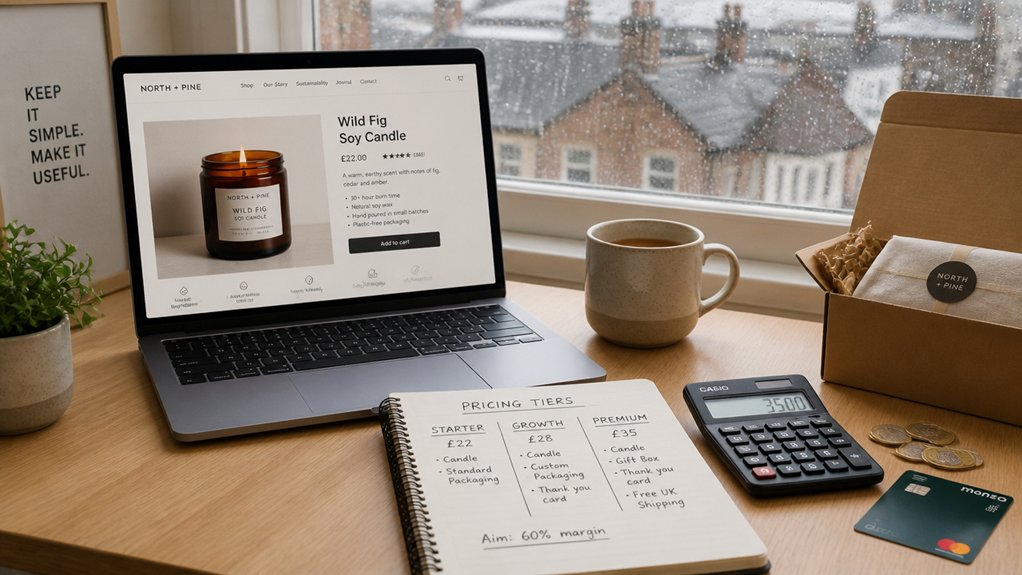
Now you’ll turn that niche into a clear UK-ready offer: spell out exactly what you deliver, your terms, and how you handle data and refunds so you meet UK consumer rules and GDPR expectations.
Keep pricing simple and low-risk to start—one core package plus an entry option (like a starter tier or trial) so people can say yes quickly.
Set price points you can defend with basic maths (costs + time + target margin) and test conversions before you add extras.
UK-Compliant Offer Basics
Before you sell anything online in the UK, you’ll want an offer that’s easy to understand, priced transparently, and set up to meet basic UK consumer rules. Start with one clear outcome, what’s included, delivery method, and timeframe. Put key terms on the page: business name, contact details, and how customers can complain.
For UK compliance, align with legal regulations like the Consumer Contracts Regulations: show total cost, delivery charges, and any minimum term upfront. If you sell digital content, explain access rules and when a customer might lose cancellation rights after download/streaming starts.
Add a plain-English refund/returns policy and estimated delivery times—vague “2–6 weeks” hurts trust and conversion. Finally, keep evidence: save screenshots of your listing and policies for disputes.
Low-Cost Pricing Structure
How can you price a UK online offer cheaply without undercutting yourself? Start with your numbers: target hourly rate, delivery time, fees (Stripe ~1.5% + 20p UK cards), and VAT risk if you cross the threshold.
Set a floor price that still leaves 30–50% margin after costs, then build up.
Use simple pricing strategies: one core package, one upsell, and one subscription. For example, sell a £49 starter template, add a £99 setup call, and offer £15/month support.
These revenue models spread risk and smooth cashflow without heavy ad spend. Anchor value with outcomes, not hours, and publish clear terms: delivery timeline, refund policy, and what’s included.
Test prices every 20–30 sales, not daily.
Do the UK Legal Basics (HMRC, GDPR, Terms)

Although the admin can feel dull, getting the UK legal basics right early will save you time, money, and headaches once sales start coming in.
Start with HMRC: register as self-employed if you’re trading, keep digital records, and set aside money for Income Tax and National Insurance to stay on top of tax compliance. If your turnover approaches the VAT threshold (£90,000), plan ahead and monitor monthly.
Next, handle GDPR: collect only the data you need, state your lawful basis, and publish a clear privacy notice for strong data protection. Use opt-in for marketing and keep consent logs.
Finally, write plain-English Terms: delivery timelines, refunds, cancellations, and liability limits. Add a cookie banner if you track users, and store policies where customers can find them fast.
Set Up Payments and a Business Bank Account
Once you’re ready to take money online, set up payments and a dedicated business bank account so you can get paid quickly and keep your numbers clean. Start with Payment gateways like Stripe or PayPal; they’re fast to activate and typically charge around 1.4%–2.9% + a small fixed fee per transaction, so you can price accurately.
If you sell to UK customers, enable cards plus Apple Pay/Google Pay to lift conversion and reduce abandoned checkouts.
Next, sort Business banking. Open a low-fee account (many UK challengers offer £0 monthly plans) and route all sales, refunds, and expenses through it. You’ll simplify bookkeeping, track profit weekly, and make your self-assessment or VAT return far less painful.
Set up payout schedules and basic fraud rules now.
Build a £0–£50 Website (Fast and Simple)
You don’t need a big budget to get online—many UK-friendly platforms let you launch for £0 and still look professional, then upgrade later for around £10–£50/month if you need more features.
You’ll pick a low-cost builder that supports your payments and domain, then publish fast using a simple template.
Start with only the essentials: a homepage, product/service page, pricing, contact, and basic legal pages so you can start selling this week.
Choose A Low-Cost Platform
Three smart choices can get your UK online business live for £0–£50: a marketplace profile (free), a hosted store builder (often £0–£30/month on intro deals), or a simple one-page site on WordPress.com/Carrd with a low-cost domain (£10–£15/year).
Start with a quick platform comparison: if you need instant traffic, choose Etsy/eBay/Facebook Marketplace; if you need checkout, inventory, and UK shipping rates, try Shopify Starter, Wix, or Squarespace trials; if you sell services, use Carrd or WordPress.com for speed and SEO basics.
Keep feature customization minimal at first—logo, colours, one offer, one payment method. Watch total cost: domain + transaction fees + app add-ons.
Pick the cheapest option that supports your next 10 sales reliably.
Launch With Essential Pages
Because most buyers decide in seconds, launch with a tiny set of pages that answer their questions fast: a focused Home (what you sell + who it’s for), a clear Product/Services page with pricing, an About page that builds trust, a Contact page, plus the legal basics (Privacy Policy, Terms, and a Returns/Refunds page if you sell goods).
Keep it £0–£50 by using a free theme on WordPress.com, Carrd, or Shopify’s trial, then buy a domain (~£10/year) when you validate demand.
Write headlines that match search intent, add 3–5 FAQs, and put one primary call-to-action per page to lift conversions.
Use simple branding strategies: one logo, two fonts, three colours.
Add a newsletter signup and one social proof block for customer engagement.
Use Free Tools for Branding, Admin, and Delivery
While cash is tight at the start, free tools can cover most of your branding, admin, and delivery needs without slowing you down.
For Brand identity, use Canva’s free templates to create a logo, colour palette, and social headers in under an hour, then store assets in Google Drive so you stay consistent everywhere.
For admin, track cash flow in Google Sheets, invoice with Wave, and manage tasks in Trello; these tools reduce errors and keep you audit-ready. Use a free email address on Gmail, but set up a domain later when sales justify it.
For delivery, sell digital files via Gumroad’s free plan or send downloads through Google Drive links. For services, schedule with Calendly free and meet on Google Meet.
Strong Customer engagement comes from fast replies and clear, automated confirmations.
Get Your First UK Customers (5 Quick Channels)
Once your offer looks credible and you can deliver it smoothly, you need customers fast—and the quickest wins usually come from channels you can start today with zero ad spend.
Start with your network: message 30 relevant contacts and ask for one intro each; track replies in a simple sheet and aim for a 10% referral rate.
Next, join UK niche communities (Facebook Groups, WhatsApp, Slack) and answer questions daily; one helpful post can drive 3–5 DMs.
Third, pitch Local partnerships with cafés, salons, gyms, or trades—offer a referral cut or bundle deal.
Fourth, run Influencer collaborations with micro-creators (5k–25k followers); give a unique code and pay per sale.
Fifth, list on marketplaces (Etsy, Fiverr, Bark) to capture ready-to-buy traffic quickly.
Budget Marketing That Works in the UK (SEO + Social)
If you want steady leads without burning cash on ads, put most of your effort into two compounding channels: SEO and consistent social content.
Start with SEO: pick 10 buyer-intent keywords (e.g., “near me”, “price”, “best in UK”), then publish one tight page per keyword with clear FAQs, pricing, and internal links. Add a free Google Business Profile even if you’re online-only, and earn reviews to lift clicks.
On social, post 3–5 times weekly: quick demos, before/after, behind-the-scenes, and customer proof; reuse the same core video across TikTok, Instagram Reels, and YouTube Shorts.
Layer in Influencer collaborations with micro-creators (5k–25k followers) on gifted or affiliate deals.
Test Guerrilla tactics: QR flyers at noticeboards, local events, and coworking spaces.
Reinvest Your First Profits to Grow Sustainably
Because early profits disappear fast when you treat them like a payday, you’ll grow quicker by reinvesting them into the few inputs that measurably increase sales and reduce workload. Start with a simple rule: reinvest 50–80% until you’ve got consistent weekly sales and a cash buffer.
Put profit reinvestment into three buckets: (1) conversion lifts—better product photos, clearer landing pages, faster checkout; (2) demand—small, trackable ads or influencer fees where you can measure CPA and ROAS; (3) time savings—automation, templates, and a VA for repetitive admin.
Track one metric per spend (e.g., conversion rate, email sign-ups, fulfilment time) and stop anything that doesn’t improve it in 14 days. This keeps cash working, reduces burnout, and creates sustainable growth over months, not spikes.
Conclusion
You don’t need deep pockets to start an online business in the UK—you need a clear, cheap model, quick validation, and consistent customer contact. Test your idea in 48 hours, pick a reachable niche, and package a simple, UK-ready offer with sensible pricing. Sort HMRC, GDPR, and basic terms, then run lean with free tools. Win first buyers via five fast channels, boost traffic with SEO + social, then reinvest profits for steady, scalable success.