

Is it really true that you need a big budget to stand out online, or do you just need sharper positioning and cleaner local SEO? You win faster when your “why you” message is clear, your site builds trust in under 10 seconds, and your Google Business Profile earns clicks and calls. Add consistent NAP, targeted keywords, and reviews you reuse everywhere, and you’ll see measurable lift—but only if you avoid the most common visibility leak…
Key Takeaways
- Define a clear “Why You” value proposition using customer pain points, desired outcomes, and measurable differentiators.
- Use specific, outcome-led headlines and consistent messaging across titles, H1s, and meta descriptions to match search intent.
- Build fast trust with visible reviews, certifications, and above-the-fold contact info placed near primary calls-to-action.
- Win local searches by standardizing NAP everywhere, optimizing keywords, and creating unique location pages for each service area.
- Strengthen presence with an optimized Google Business Profile, weekly posts, fresh photos, and a consistent review-request and response process.
Define Your Small Business “Why You” Message

While you can build a website and post on social media, you won’t convert visitors into customers until you clearly define your “Why You” message—your specific value proposition that tells people what you do, who you serve, and why they should choose you over competitors.
Start with customer data: top 3 pain points, top 3 desired outcomes, and your measurable differentiator (speed, guarantee, niche expertise, price transparency).
Then turn it into a one-sentence headline plus proof. Use business storytelling to connect the problem to your origin and method, but keep it outcome-led.
Protect brand authenticity by avoiding vague claims like “best quality”; instead, name specifics: turnaround times, certifications, service area, or results.
Repeat your “Why You” consistently in page titles, H1s, and meta descriptions to capture intent and drive clicks.
Make Your Website Trustworthy in 10 Seconds
Because most visitors decide in under 10 seconds whether to stay or bounce, your website needs to signal credibility immediately with conversion-critical trust cues: a clear headline that matches their search intent, above-the-fold contact info, visible reviews/ratings, recognizable certifications or licenses, fast load speed, and clean navigation that makes “Book,” “Call,” or “Get a Quote” the obvious next step.
Audit these trust signals like a landing page: does your hero section state the outcome you deliver, for who, and how fast? Put proof near the CTA—star ratings, review counts, and short testimonials with names. Show credibility factors such as insurance, guarantees, and secure payment badges.
Remove friction: fewer fields, fewer clicks, readable fonts, and no pop-ups that block actions. Track bounce rate and CTA clicks weekly.
Fix the Local SEO Basics (NAP, Pages, Keywords)
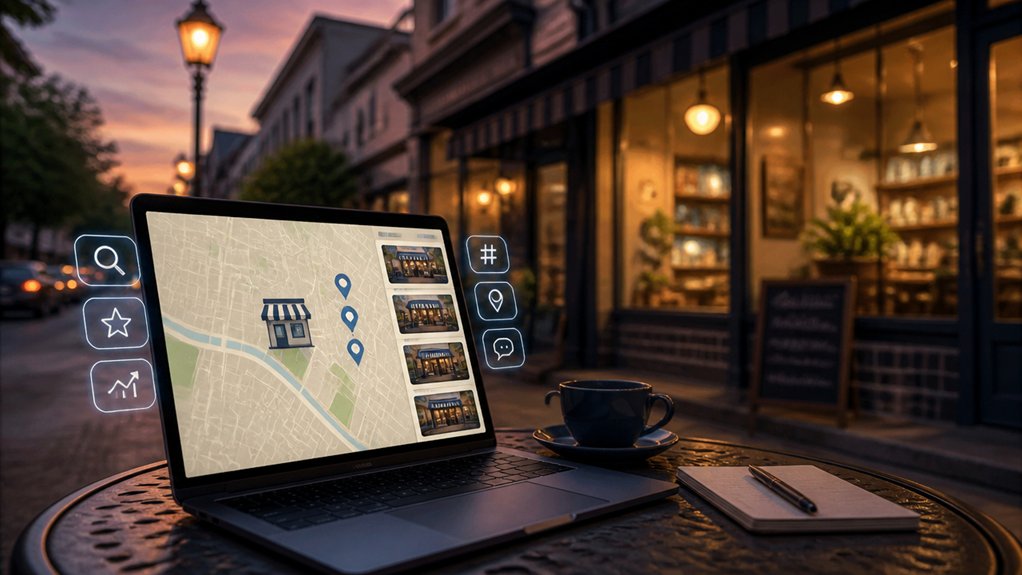
Next, you’ll tighten local SEO by standardizing your NAP (name, address, phone) everywhere it appears, because inconsistent citations can suppress map pack visibility and trust.
You’ll also build conversion-focused location landing pages that match each service area, reinforce relevance, and funnel visitors to calls and directions.
Finally, you’ll target high-intent local keywords (service + city/near me) across titles, headers, and copy to capture ready-to-buy searches and turn them into leads.
Standardize NAP Everywhere
Even if you’ve nailed your website content, inconsistent NAP (Name, Address, Phone) across the web can still suppress your local rankings and cost you calls. Google cross-checks citations to verify legitimacy; mismatches dilute trust signals and can lower map visibility.
Standardize your exact business name, suite format, and primary phone across Google Business Profile, Apple Maps, Bing, Yelp, Facebook, and top industry directories.
Audit your listings, fix duplicates, and remove old numbers so every citation reinforces the same entity. Keep your NAP in the site header/footer and on your contact page, then match it to schema markup.
Consistency improves click-to-call confidence, supports customer loyalty, and strengthens brand storytelling—so searchers recognize you instantly and choose you over lookalikes. Track ranking lifts and call volume monthly.
Build Location Landing Pages
When you serve more than one city or neighborhood, you need a dedicated location landing page for each area to rank in the local pack and convert “near me” searches into calls. Build one URL per service area and keep it indexable, fast, and mobile-first so Google can crawl it and users don’t bounce.
Add your exact NAP, embedded map, hours, service radius, photos, and reviews pulled from that location. Use structured data (LocalBusiness) and internal links from your main Services and Contact pages to pass authority.
Keep content unique: highlight local branding elements like landmarks you serve, parking tips, and community partnerships. Add a clear CTA above the fold, plus click-to-call buttons and a short quote form to lift customer engagement and leads.
Target Local Search Keywords
Location pages only perform if they match the exact searches people use in your service areas, so lock in your local keyword targets before you refine the rest of your on-page SEO. Start with keyword research in Google Search Console, Google Business Profile insights, and competitor SERPs to spot high-intent modifiers: “near me,” neighborhood names, zip codes, and “open now.”
Map each term to one page, then align your title tag, H1, URL, and first 100 words to that query. Keep NAP consistent across pages, schema, and citations to reinforce relevance.
Tie keywords to local branding by mirroring how customers describe you (e.g., “family-owned plumber in Logan Square”). Track rankings, calls, and form fills, and prune terms that don’t convert.
Optimize Your Google Business Profile for Clicks
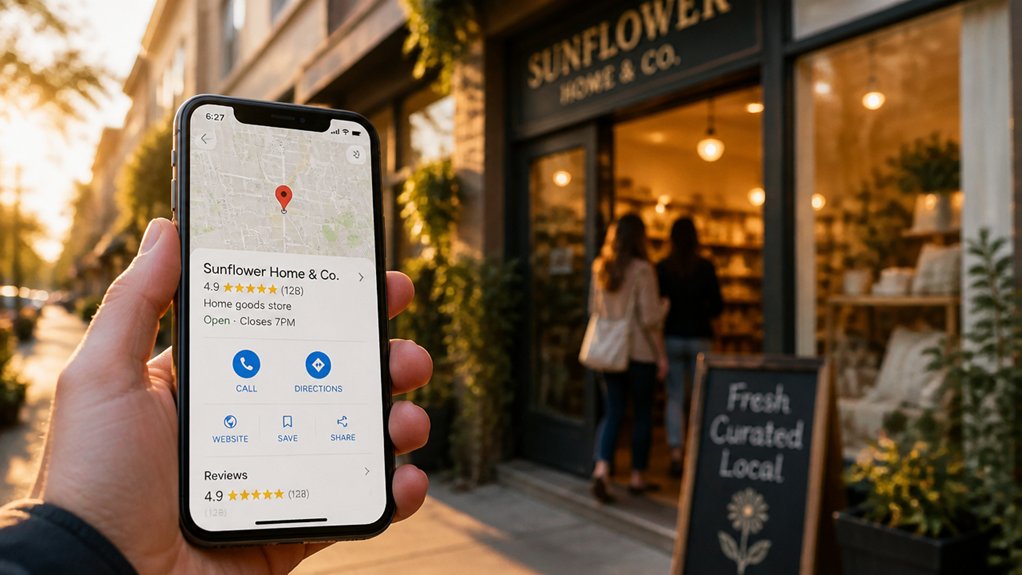
Your Google Business Profile often wins (or loses) the click in local search, so you’ve got to perfect every business detail—categories, services, hours, and attributes—to match high-intent queries.
Add high-impact photos that show your storefront, team, and best sellers, because strong visuals lift engagement and drive more calls, direction requests, and bookings.
Use Posts and Offers to stay fresh in the SERP and push time-bound promotions that convert searchers into customers.
Perfect Your Business Details
Because most local searches end with a click—call, directions, or a website visit—tightening up your Google Business Profile details directly boosts conversions.
Start by locking in NAP consistency (name, address, phone) across your site and directories to strengthen local SEO signals.
Choose the most specific primary category, then add relevant secondary categories to match high-intent queries.
Write a keyword-informed business description that supports brand storytelling without stuffing; lead with what you do, who you serve, and your differentiator.
Add services/products with pricing ranges when possible to pre-qualify leads and lift customer engagement.
Set accurate hours, holiday hours, and attributes (pickup, accessibility, payments) to reduce friction.
Turn on messaging only if you can respond fast; slow replies cost clicks.
Add High-Impact Photos
When you add sharp, relevant photos to your Google Business Profile, you give searchers instant proof of quality and reduce the hesitation that kills clicks. Prioritize a crisp cover image, a recognizable logo, and 8–12 recent shots that match your top services and location cues.
Use Visual storytelling: show your team at work, close-ups of finished results, and a clear storefront so mobile users can find you fast. Maintain branding consistency with the same colors, lighting style, and framing across images to build recall in crowded map results.
Rename files with descriptive terms (not IMG_1234) and upload varied categories (interior, exterior, products, staff). Refresh monthly; recency signals activity, improves engagement, and boosts call and direction actions.
Use Posts And Offers
Although most profiles sit static for months, Google Business Profile Posts and Offers let you publish time-sensitive updates that can lift engagement and turn map impressions into clicks, calls, and direction requests.
Build a simple content strategy: post weekly and align topics to high-intent queries (seasonal services, new arrivals, last-minute openings). Use UTM-tagged links to measure clicks in GA4, then double down on what converts.
Write benefit-first copy, add a strong CTA (Call now, Book, Get offer), and include one keyworded sentence that matches your top category. Keep images crisp and text scannable.
For engagement tactics, run limited-time offers with clear terms, expiration dates, and redemption steps. Refresh before offers expire to signal freshness and relevance to Google.
Get More Reviews (and Use Them Everywhere)
Even if you deliver five-star service every day, your online reputation still hinges on what customers say publicly—reviews often rank among the top local SEO signals and heavily influence click-throughs and calls.
Make review requests part of your workflow: ask at checkout, follow up within 24 hours, and share a direct link to your review form.
Increase response rates by keeping the ask short and personal, and by timing it right after a win.
Treat Customer feedback like conversion data. Track volume, recency, and star rating, then fix recurring issues fast.
Use Review management to reply to every review with keywords, service areas, and next-step offers.
Repurpose your best quotes on landing pages, emails, proposals, and your homepage to boost trust and reduce bounce.
Pick 1–2 Social Platforms Your Customers Use
Reviews build trust, but social platforms decide how far that trust travels—and where new customers discover you. Don’t spread yourself across five channels and expect consistent leads. Pick 1–2 platforms that match your buyers’ intent and location signals, then optimize for discovery and conversions.
Start with your customer data: where referrals mention you, which apps drive website sessions, and which channels competitors rank on locally. If you’re B2C and visual, prioritize Instagram or TikTok; if you’re service-based, use Facebook or Nextdoor; if you sell B2B, focus on LinkedIn.
Set one primary goal per platform (calls, bookings, store visits) and track it weekly. Tight customer targeting plus steady Social media engagement turns attention into measurable revenue.
Post Content People Save, Share, and DM About
When you post content people save, share, and DM, you trigger the strongest distribution signals on most platforms—and you keep your business showing up long after the first scroll.
Optimize for “save value”: checklists, quick tutorials, pricing explainers, and local guides that answer high-intent searches in your niche.
Use Content storytelling to package proof—before/after, behind-the-scenes, customer outcomes—so people forward it to someone who needs it.
Design for frictionless sharing with consistent Visual branding: readable text overlays, branded templates, and a recognizable color palette that boosts recall in crowded feeds.
Track saves, shares, and DMs per post, then double down on topics and formats that outperform your baseline.
Every saved post becomes evergreen discovery, driving repeat exposure and trust without extra spend.
Convert Visitors With Offers, CTAs, and Forms
Saves, shares, and DMs keep your content circulating, but conversion happens once that attention hits a clear offer and a low-friction next step.
Match each page to one intent: “book,” “get a quote,” or “download.” Offer incentives that align with search intent—first-visit discounts, free checklists, or limited-time bundles—so visitors see immediate value.
Create compelling CTAs above the fold and near key proof points like reviews and FAQs. Use specific verbs and outcomes: “Get a 10-minute estimate” beats “Submit.” Keep forms short: name, email, and one qualifying question.
Add click-to-call and SMS options for mobile traffic. Reinforce trust with privacy language, response-time promises, and badges. Every element should reduce friction and move the visitor forward.
Track Leads, Rankings, and Conversions Weekly
Even if your website looks polished, you won’t know what’s working until you track leads, rankings, and conversions every week. Set up GA4 events for form submits, calls, and purchases, then review a simple dashboard every Monday.
Compare organic sessions to lead volume so you spot pages that rank but don’t convert, and fix intent mismatches, CTAs, or load speed.
Use Customer segmentation to break results by location, device, and service line, then prioritize the segments with the highest conversion rate and lowest CPA.
Run Competitor analysis to monitor keyword movement, SERP features, and content gaps, then update titles, internal links, and FAQs to win clicks.
Track cost per lead, close rate, and revenue per page so you scale what pays.
Conclusion
You don’t need a huge budget to stand out online—you need clarity, trust, and consistency. When you nail your “why you” message, load fast, and lock in NAP + local keywords, you show up where buyers search. Keep your Google Business Profile click-ready, collect reviews, and reuse them on your site and socials. Focus on 1–2 platforms and post save-worthy content. Then track leads and conversions weekly—why guess when you can measure?